 ENG
ENG
 INA
INA
Storytelling in Elementary Schools, Striving to Increase Knowledge and Awareness about Wildlife Protection from an Early Age Partners
Bali, December 9, 2023 – Indonesia is one of the Southeast Asian countries with diverse biodiversity that attracts significant trade in domestic and international markets. According to the Convention on International Trade in Endangered Species of Wild Fauna and Flora (CITES), Indonesia exported approximately 25,672 wildlife species to several other countries between 2016 and 2021.
Wildlife trade poses various health risks and environmental damage. The transmission risks from wildlife trade, in the form of pathogens, threaten zoonotic diseases such as Rabies, Avian Influenza, Leptospirosis, Salmonellosis, and Pox.
The One Health Collaborating Center (OHCC) of Udayana University has the opportunity to collaborate with the International Alliance Against Health Risks in Wildlife Trade (implemented by The Deutsche Gesellschaft für Internationale Zusammenarbeit) to initiate the program "The Application of One Health Approach to Raise Wildlife Protection Awareness in Indonesia" (OHAWE). This program applies the One Health approach to raise awareness about wildlife protection in Indonesia.
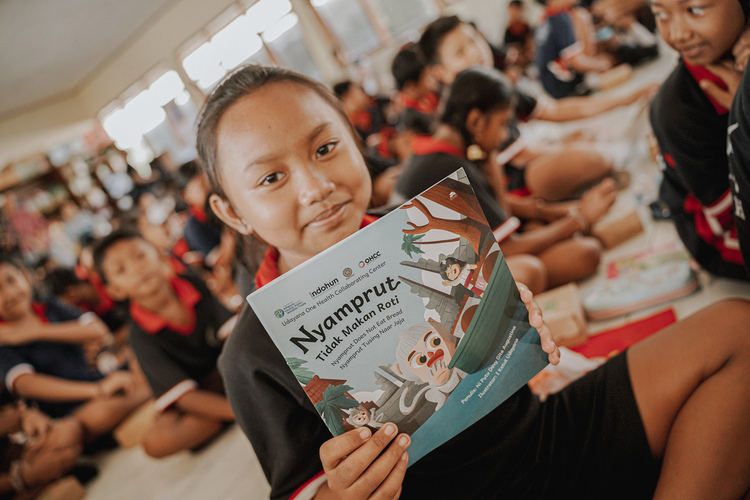
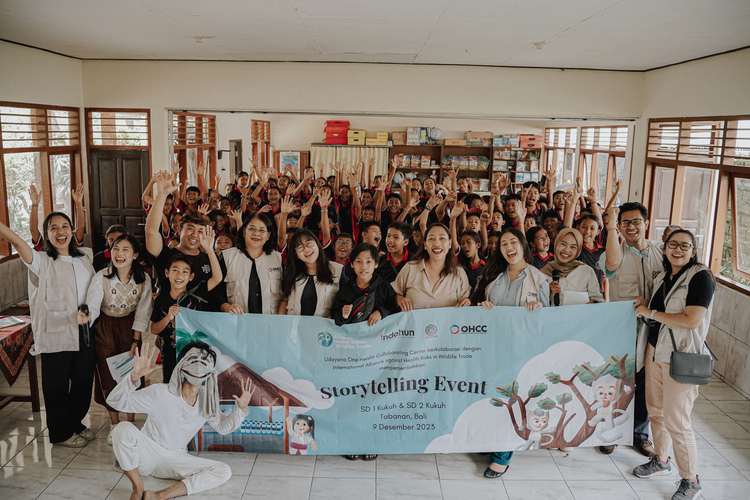
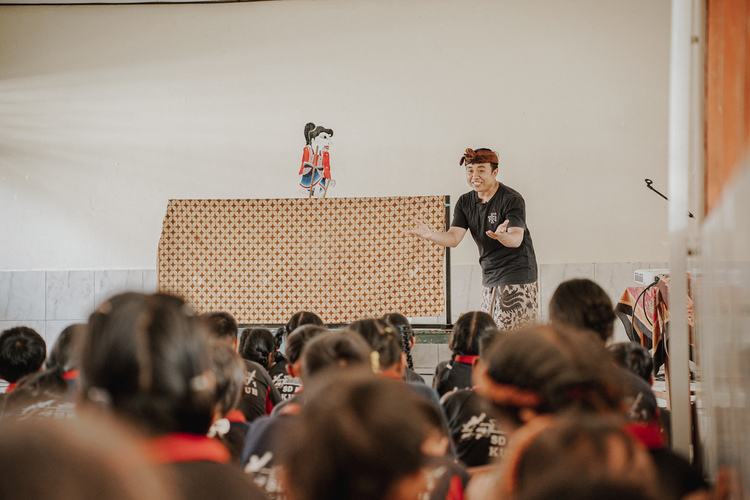
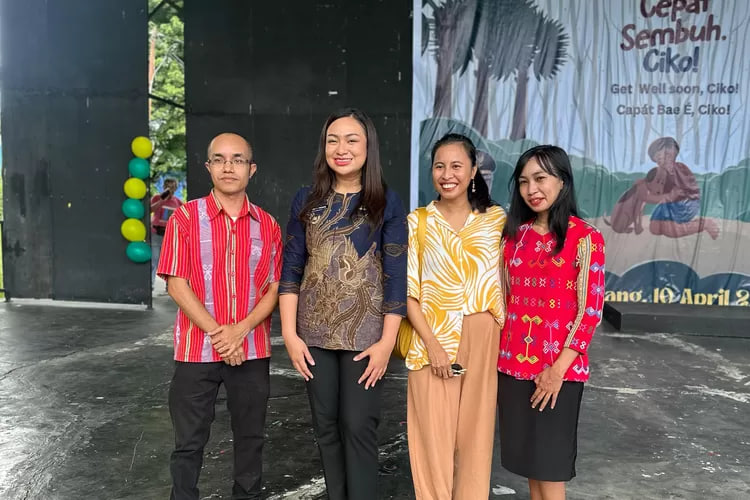
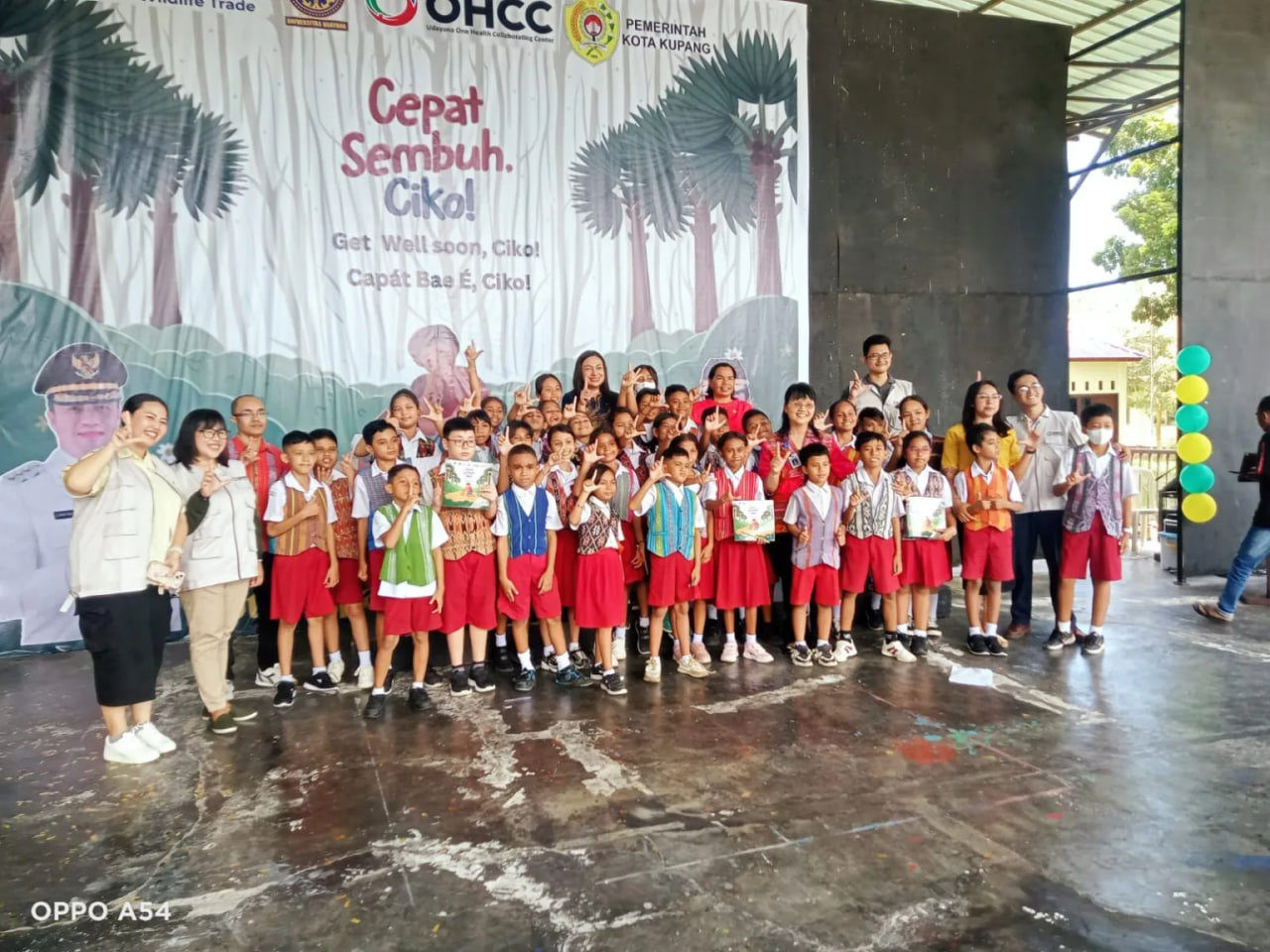
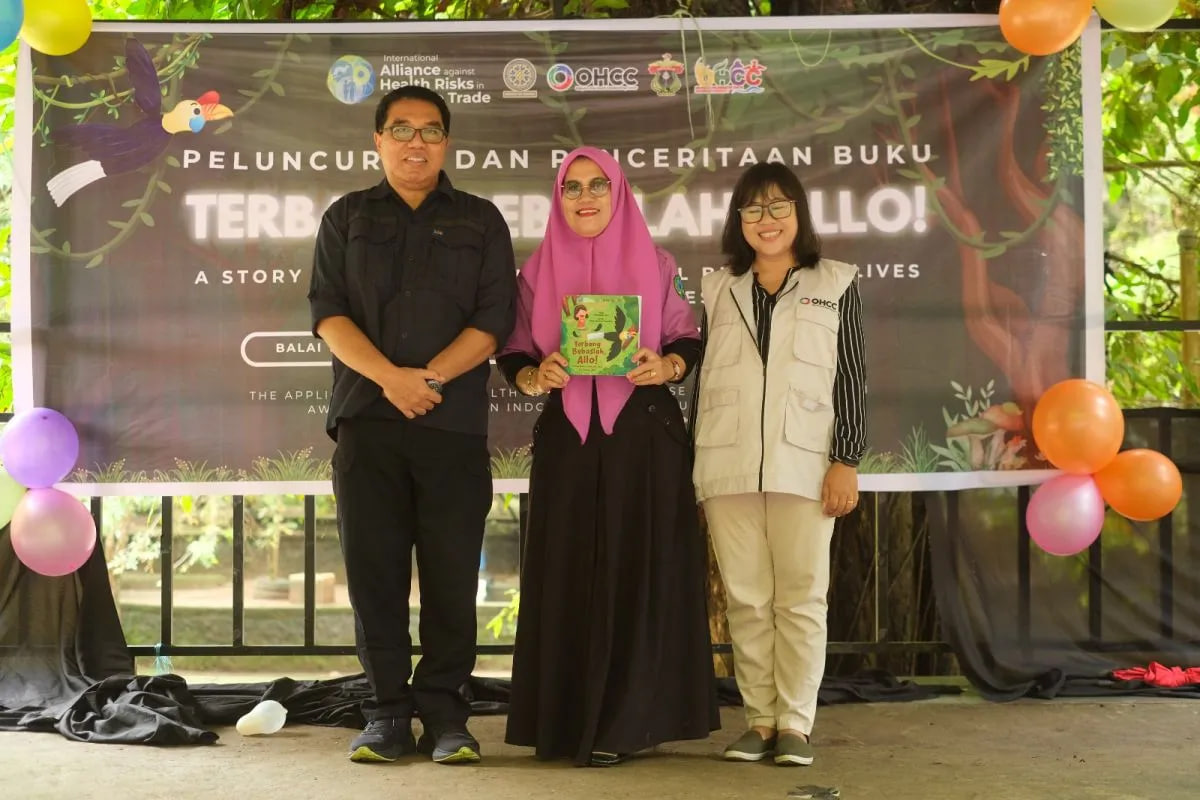
Through creative and local cultural approaches, the OHCC of Udayana University collaborated with authors, illustrators, and translators to release a children's storybook titled “Nyamprut Doesn’t Eat Bread” and performed it as a form of risk communication to children. In addition to distributing the storybooks, the book launch event was also enlivened with a storytelling performance at SD Negeri 1 Kukuh Marga, Tabanan. It is hoped that this children's storybook, presented in three languages—Indonesian, Balinese, and English—will provide adequate insight to children in the region about wildlife trade and its risks. Furthermore, children are also expected to be able to drive more change once they develop respect and an appreciative attitude towards wildlife conservation from an early age.
The implementation of this program also involves other OHCC networks under the Indonesia One Health University Network (INDOHUN) to reach a broader program coverage from western to eastern Indonesia. By implementing the program in several regions, efforts to enhance public knowledge and awareness regarding the risks and threats of wildlife trade can be conveyed extensively.
Gallery
UDAYANA UNIVERSITY