 ENG
ENG
 INA
INA
Storytelling to Raise Wildlife Protection Awareness: The OHAWE Project at Pelaihari Nature Tourism Park Partners
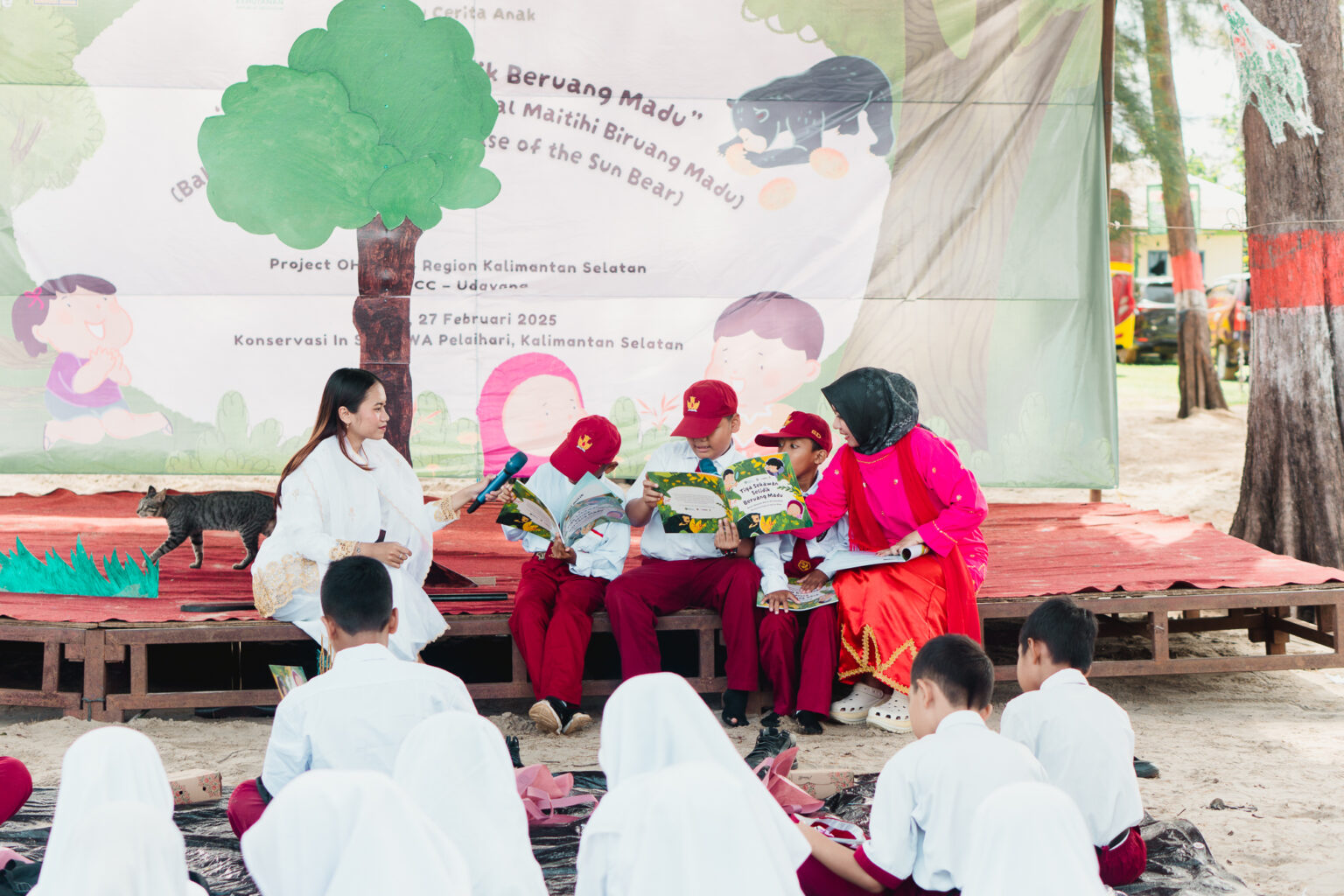
The One Health Collaborating Center (OHCC) Udayana, through its project "The Application of One Health Approach to Raise Wildlife Protection Awareness (OHAWE)," facilitated a storytelling activity in South Kalimantan. This event took place at the Pelaihari Nature Tourism Park (TWA) and involved various parties, including the South Kalimantan Provincial Natural Resources Conservation Center (BKSDA) Office, the Head of the Pelaihari TWA Resort, and an academic team from OHCC Udayana.
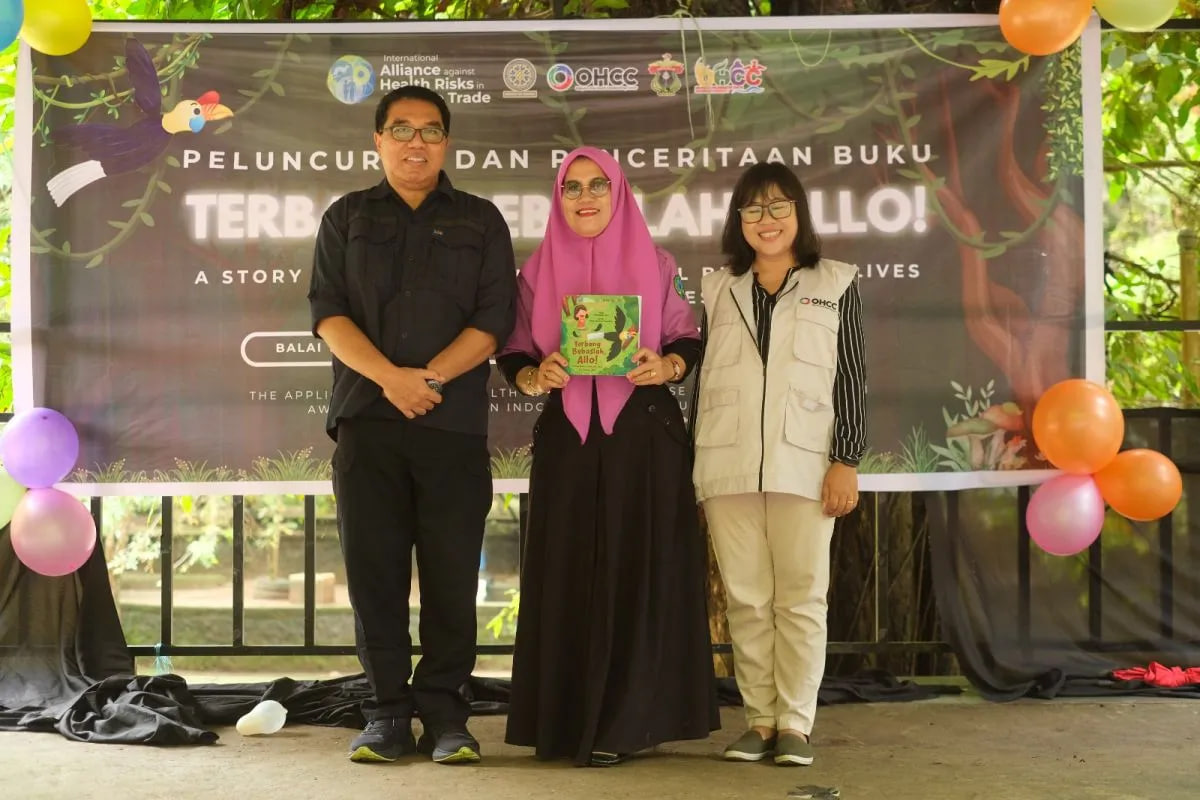
Prior to the storytelling session, a storybook themed around the sun bear (Helarctos malayanus) was compiled. This book was developed to educate children about the increasingly concerning condition of sun bears. Sun bears are currently listed as vulnerable on the International Union for Conservation of Nature and Natural Resources (IUCN) Red List due to significant population decline, rampant illegal hunting, and the loss of their natural habitat. These storybooks were distributed to the activity participants and will also be distributed to several other locations as part of the wildlife conservation education campaign.
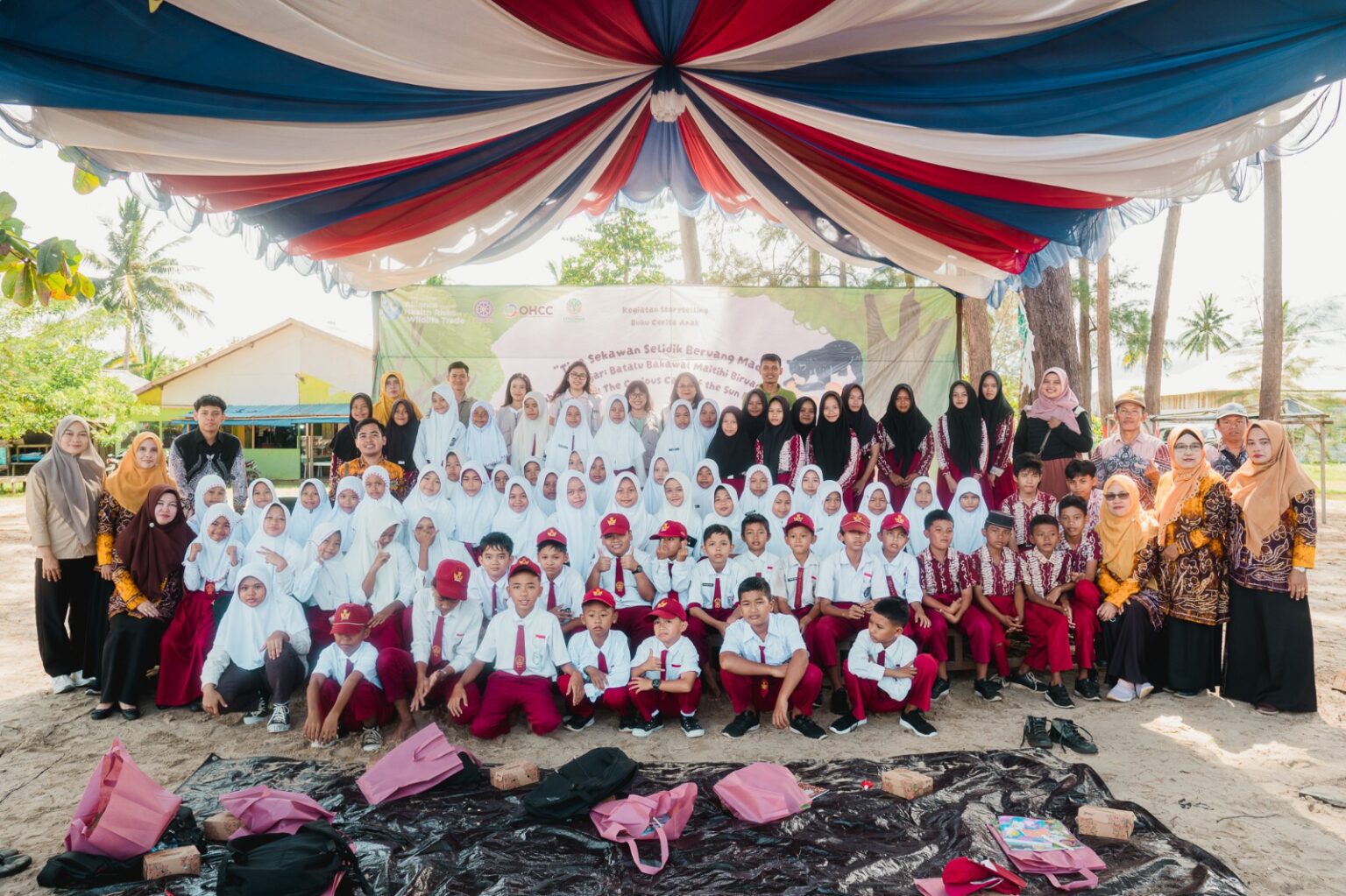
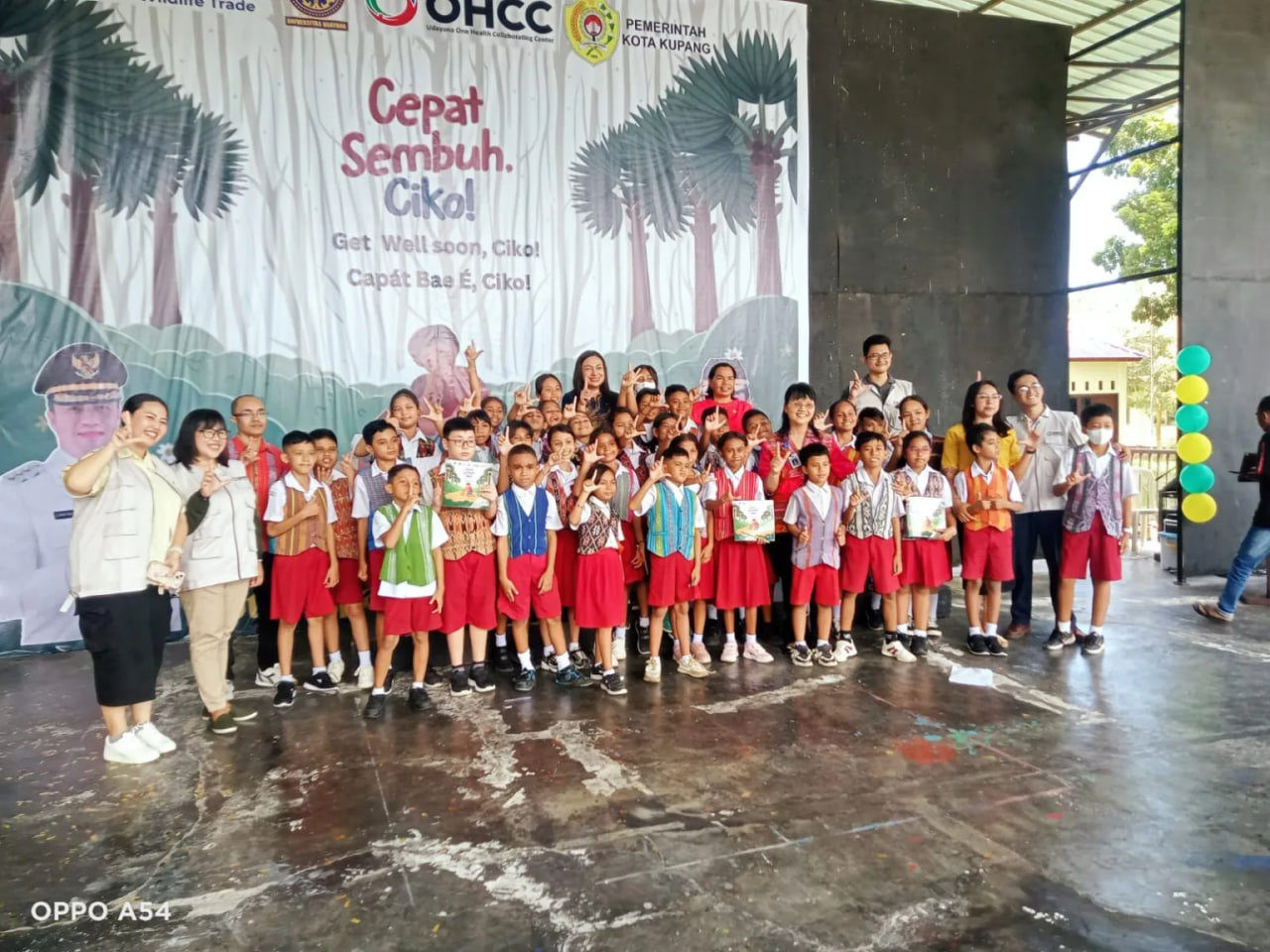
The storytelling activity was attended by 75 elementary school students from grades 4-6 of SDN 1 Galam and SDN 1 Batakan. Through interactive storytelling, the children were invited to understand the importance of protecting sun bears and the collective efforts needed to prevent their extinction.
The event was also attended by the OHCC Udayana team, led by the OHCC Udayana Coordinator, Prof. Dr. dr. Ni Nyoman Sri Budayanti, Sp.MK(K), and the South Kalimantan Regional Coordinator of the OHAWE Project OHCC Udayana, Juniati Rahmadani, S.Si., MPH. The presence of the expert team from Udayana demonstrates strong academic collaboration in developing innovative One Health-based approaches to raise public awareness about wildlife trade issues and the conservation of endemic species.
Prof. Dr. dr. Ni Nyoman Sri Budayanti, Sp.MK(K) stated, "Today's storytelling activity is the closing part of a series of activities for creating children's storybooks about wildlife in three languages: the respective local language, Indonesian, and English. The purpose of creating these storybooks is to educate elementary school-aged children to protect wildlife from extinction and to make them aware of the health impacts from the health perspective, known as zoonosis."
"The creation of these storybooks is a collaboration between OHCC Udayana and GIZ. We hope that the storybooks from the 10 planned provinces can increase children's knowledge about wildlife."
Meanwhile, Juniati Rahmadani added, "This activity is very beneficial, and we hope that through this activity, the students become aware of the importance of protecting their nature and environment. We hope similar activities can be carried out in other regions and perhaps for other wildlife protection education, not just for sun bears."
"This education is important so that wildlife can continue to live in their habitats, and their ecosystems remain undisturbed, thus preventing conflicts between wildlife and humans. Furthermore, the absence of interaction with wildlife will prevent health risks associated with disease transmission from wildlife to humans."
One of the student participants shared her impression: "I am very happy with this activity and just found out that sun bears exist in South Kalimantan."
"The story was very exciting and fun. The message I got was to conserve the forests and sun bears, and that we must not keep or feed sun bears. I hope this story will also benefit my other friends."
A teacher who also attended the activity shared her perspective: "Today's event was very interesting and meaningful because through role-playing, the children could understand the story of the sun bear which emphasizes nature conservation, specifically forest protection. This is very beneficial for the younger generation in maintaining nature conservation."
A representative from the students' parents also did not want to miss sharing her experience attending this storytelling activity and opined: "I feel proud of this activity because the children can better understand nature and the animals that need protection, including sun bears."
The Head of the Pelaihari Region I Conservation Section, representing the South Kalimantan Provincial BKSDA, also shared his views on this storytelling activity, stating: "We thank OHCC Udayana for organizing this activity and hope it becomes part of a conservation campaign to build awareness about conservation, especially among the younger generation and children living around conservation areas. We hope activities like this are not only conducted in the Pelaihari TWA area but also in other conservation areas within the South Kalimantan BKSDA region."
The OHAWE program aims not only to raise children's awareness of wildlife protection but also to serve as part of academic research to understand the effectiveness of the storytelling approach in conservation education. It is hoped that the results of this research can become a reference for similar initiatives in various regions across Indonesia.
Through this activity, it is hoped that the younger generation can better understand the importance of maintaining ecosystem balance and reducing the risk of zoonotic disease spread associated with the wildlife trade. The OHAWE Project is committed to continuously expanding the reach of education and collaboration to create a more sustainable future for Indonesia's wildlife.
Gallery
UDAYANA UNIVERSITY