 ENG
ENG
 INA
INA
The forest fires brought Pongo abelii together with a girl named Melu. Zoonotic exposure ultimately separated their bond. Partners
The forest fires brought Pongo abelii together with a girl named Melu. Zoonotic exposure ultimately separated their bond.
BANDA ACEH – The unique and touching story of the connection between Dek Ben and Melu has finally been depicted in "Selamat Jalan ke Habitatmu Dek Ben" ("Farewell to Your Habitat, Dek Ben").
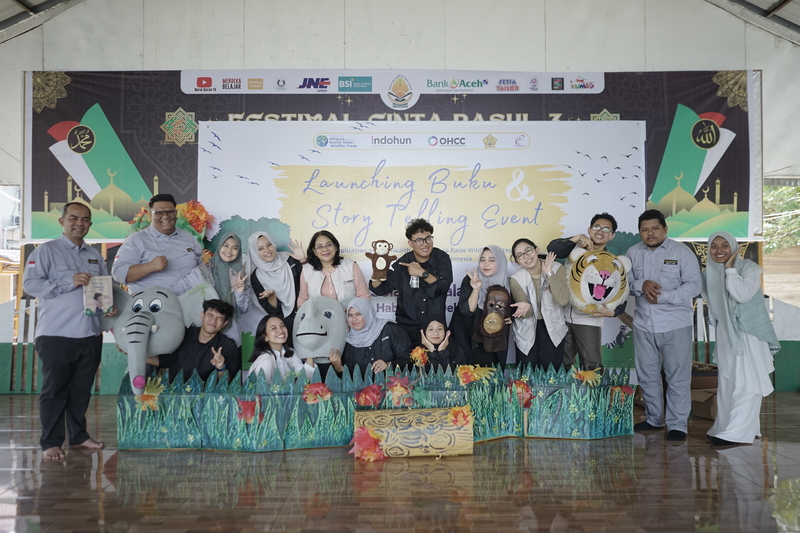
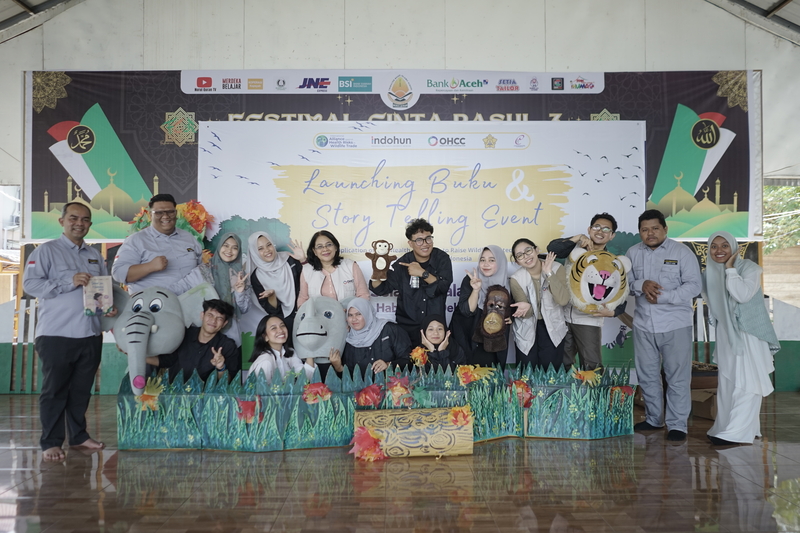
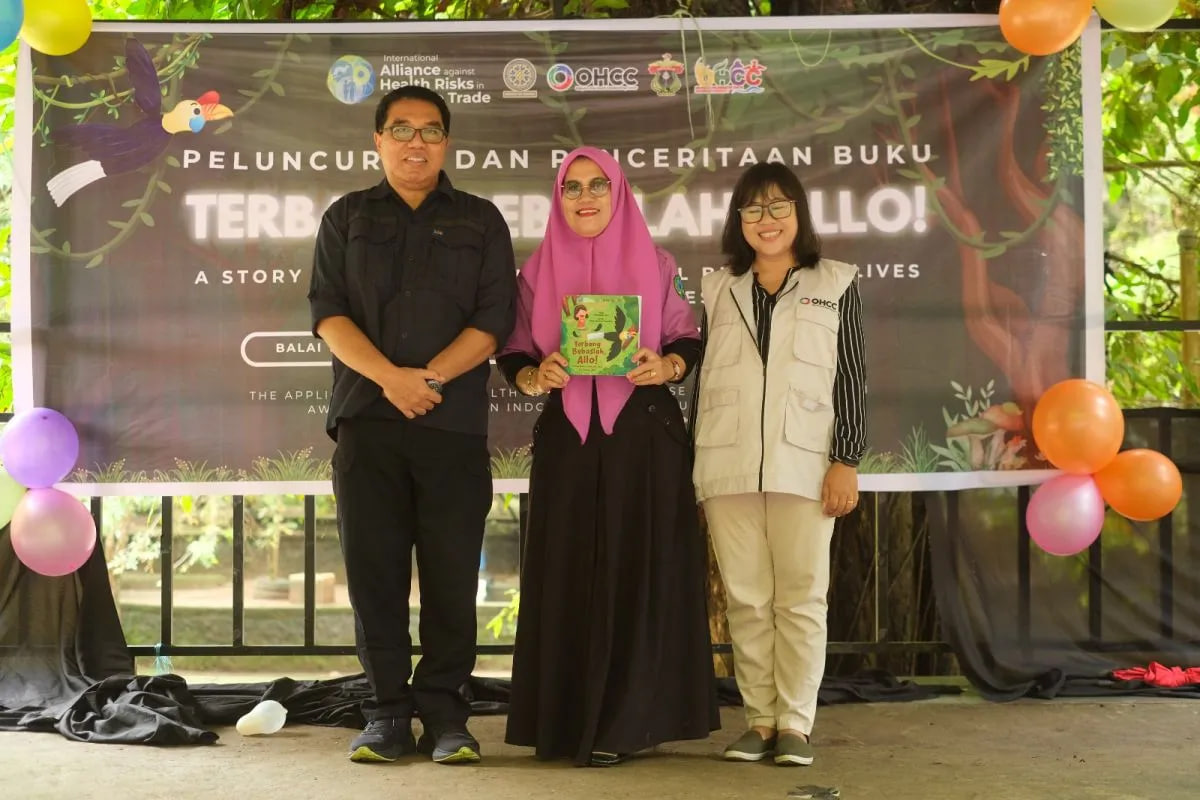
On Friday, December 22, 2023, at SDIK Nurul Quran, Aceh Besar, the Center for Tropical Veterinary Studies-One Health Collaborating Center (CENTROVETS-OHCC) of Universitas Syiah Kuala collaborated with Udayana OHCC - Udayana University, Bali, to launch the book "Selamat Jalan ke Habitatmu Dek Ben."
This book tells the story of the life of a baby Sumatran orangutan (Pongo abelii) who survived a forest fire. It was found accidentally by a resident, then taken home and cared for by a girl named Melu.
In their daily life, Melu was very attached to this baby orangutan. She even treated it like a member of her own family. To make interaction easier, Melu named the orangutan "Dek Ben." In Aceh, "Ben" is a term for an orangutan. Living with its new family, Dek Ben was often taken along to play with Melu and her friends. Until eventually, the villagers came to know it.
To make a long story short, as time went on, Dek Ben showed clinical symptoms, suffering from a disease. Not long after, Melu and both her parents also experienced similar symptoms, leading them to get checked at the community health center (Puskesmas).
Not wanting to take any risks, Melu and her parents also had Dek Ben's health checked at the Animal Health Center (Puskeswan). It turned out that Dek Ben was infected with a disease. Ironically, without realizing it, several other villagers also showed the same clinical symptoms as the wild animal. This was the starting point for returning Dek Ben to the wild, its natural habitat.
The closeness with Dek Ben had transmitted a zoonosis—a disease that can be transmitted from animals to humans or vice versa.
The Coordinator of OHCC at Universitas Syiah Kuala (USK), Teuku Reza Ferasyi, explained that this wildlife storybook writing program was conducted at five universities in Indonesia that have OHCC. Each campus wrote a book with the characteristics of their respective regions.
"Aceh chose the theme about orangutans and it was written in three languages: Indonesian, English, and Acehnese," he told KBA.ONE on Friday.
Reza elaborated that this book was compiled as an alternative way to provide understanding, especially for children, about how important it is to preserve nature, protect life, and how to interact properly with wild animals so that the community does not get infected with communicable diseases.
"This book also provides an understanding of what to do when you see wild animals and what to do if you get sick," said Reza.
The presence of the book "Selamat Jalan ke Habitatmu Dek Ben" is expected to develop children's creativity in writing stories, creating animated pictures, and so on. Reza said this book will be distributed to students in Aceh. In the first stage, 50-100 copies will be distributed to SDIK Nurul Quran; subsequently, there will be a larger print run to be submitted to various stakeholders in Aceh.
The Coordinator of OHCC Udayana, Ni Nyoman Sri Budayanti, explained that there are at least five OHCCs in Indonesia, namely in Bali, Papua, Surabaya, Yogyakarta, and Aceh. These five are under the institution of the Indonesia One Health University Network (INDOHUN), collaborating to create a book program with wildlife topics in three languages.
In Papua, the topic chosen is about Cuscus; in Bali, it's the long-tailed macaque; in Surabaya, it's the langur; in Yogyakarta, it's bats; and in Aceh, it's orangutans. "Later we will have five different types of books with five regional languages and five different characters. This shows the diversity that exists in Indonesia," said Sri Budayanti.
Gallery
UDAYANA UNIVERSITY